


The Shadow of the Wind: A Book Lover’s Dream Wrapped in Mystery and History
Some books feel like stories. Others feel like experiences.
The Shadow of the Wind falls firmly into the second category.
This is the kind of novel that slowly pulls you in, wraps you in atmosphere, and refuses to let go—even after you’ve turned the final page. It’s mysterious, emotional, literary, and unapologetically devoted to the magic of books themselves.
If you love stories about stories, consider this one a love letter written directly to you.
A Story Rooted in Books and Secrets
The Shadow of the Wind is about a young boy named Daniel who discovers a forgotten book in a hidden library known as The Cemetery of Forgotten Books. That single moment sets off a chain of events that will shape his entire life.
What follows isn’t a fast-paced thriller or a neatly wrapped mystery. Instead, Zafón gives us a slow-burning literary puzzle in which every answer uncovers more profound questions.
The novel explores:
- Lost authors and forgotten works
- The power of stories to shape identity
- Secrets buried in the past
- Love, grief, obsession, and redemption
And it does all of this without ever feeling heavy or pretentious.
The Atmosphere: Dark, Moody, and Utterly Addictive
One of the book’s greatest strengths is its atmosphere.
Set in post–Civil War Barcelona, the city itself feels like a living character—shadowy streets, rain-soaked alleys, crumbling mansions, and hidden histories lurking behind every door. Zafón’s writing is rich and descriptive without being overwhelming, creating a gothic tone that feels both haunting and beautiful.
You don’t merely read this book—you explore it, with candlelight flickering and secrets whispering from the walls.

Characters That Feel Unforgettably Human
The characters in The Shadow of the Wind are deeply layered and emotionally grounded. No one exists merely to serve the plot; everyone has a history, a motivation, and something to lose.
Daniel’s journey from childhood innocence to emotional maturity feels authentic and earned. Supporting characters bring warmth, humour, and heartbreak in equal measure—especially the unforgettable Fermín Romero de Torres, who adds wit and soul to even the darkest moments.
This is a story where characters stay with you long after the book ends.
Themes That Speak to Book Lovers
If you’ve ever felt personally attacked by a novel that understands your love of reading a little too well, this one qualifies.
Zafón explores:
- The obsession readers feel for certain books
- The idea that stories never truly die
- How literature connects people across time
- The danger—and beauty—of loving something deeply
This book understands what it means to be a reader. It respects that relationship and celebrates it in a way that feels sincere and deeply emotional.
Writing Style: Lyrical but Accessible
Despite its literary reputation, The Shadow of the Wind is surprisingly readable. Zafón’s prose is poetic without being dense, elegant without feeling distant.
The pacing is intentional rather than rushed, allowing the mystery and emotional depth to unfold naturally. It rewards patient readers who enjoy savouring language, atmosphere, and character development.

Quote that I liked:
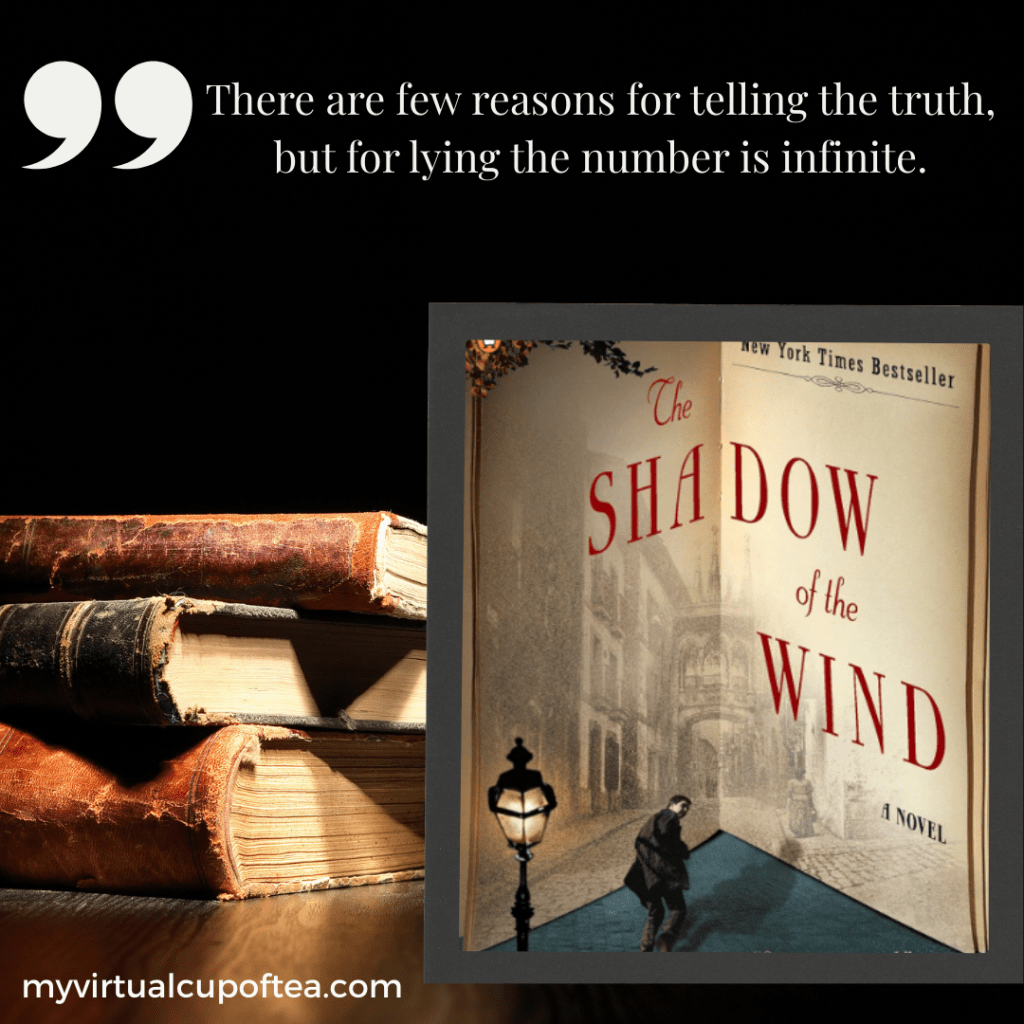
“There are few reasons for telling the truth, but for lying the number is infinite.”
A Timeless Love Letter to Stories
The Shadow of the Wind is more than just a novel—it’s a meditation on memory, storytelling, and the quiet power of books to shape who we become.
Forgotten is an allegory for death in a fictitious novel by the same title. Shadow is a perfect symbol of death, evoking images of death as metaphor rather than literal—living shadows of lives, chasing shadows of dreams, being shadows of others, letting memories shadow life.
Death is not always the worst thing that can happen (“words are not always the worst prison”).
It’s the kind of story that reminds you why you fell in love with reading in the first place.
If you’ve ever believed that books find us when we need them most, The Shadow of the Wind will feel like it was written just for you.

The Prisoner of Heaven: A Haunting, Heartfelt Return to the Cemetery of Forgotten Books
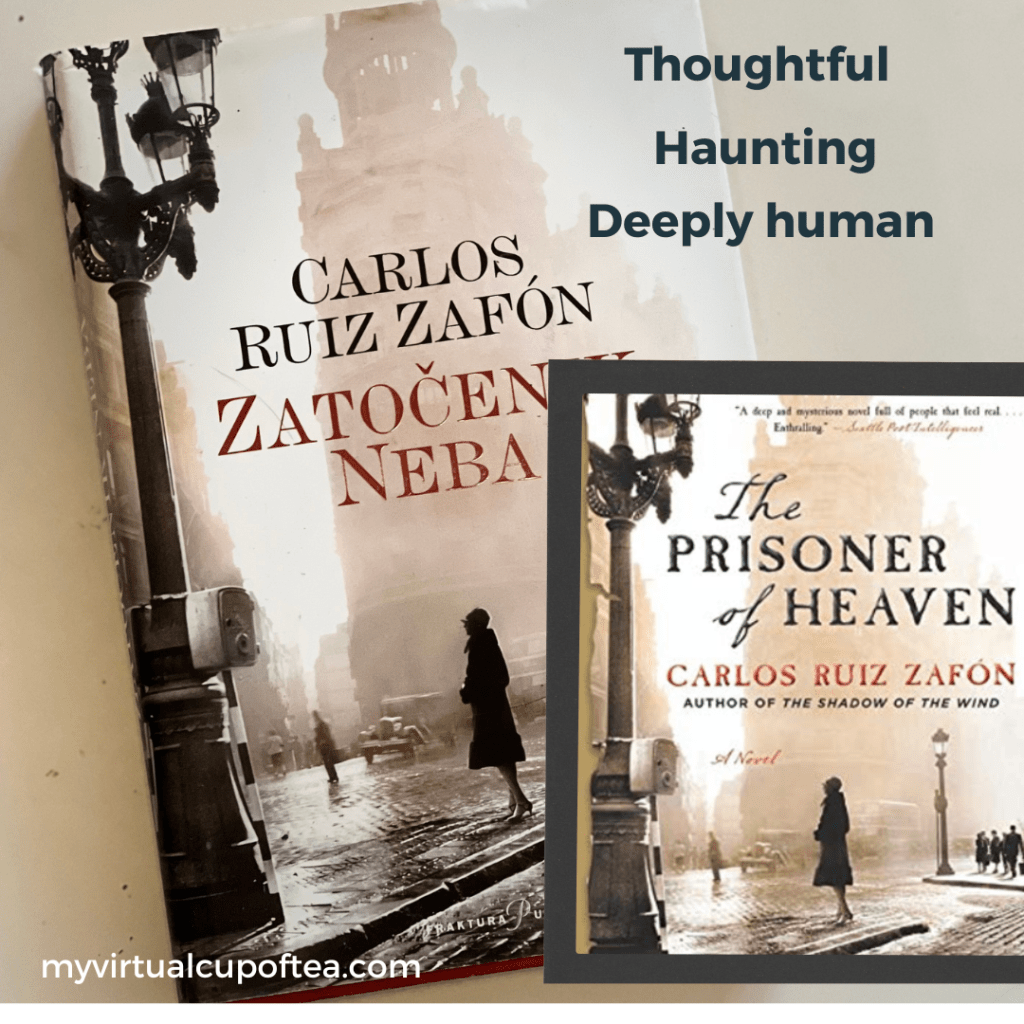
The Prisoner of Heaven, the third instalment in the Cemetery of Forgotten Books series, shifts the spotlight toward friendship, loyalty, and the scars left behind by injustice. Carlos Ruiz Zafón once again invites us back into the shadowy, romantic world of Barcelona and the mysterious Cemetery of Forgotten Books, delivering a novel that is quieter than its predecessors—but no less powerful. This third instalment in the series peels back long-hidden layers of the past, focusing on loyalty, suffering, and the stories we carry with us long after the pain has faded.
If you love literary fiction infused with mystery, history, and gothic atmosphere, this book deserves a spot on your shelf.

A Return to Familiar Faces (and Long-Buried Secrets)
One of the greatest joys of The Prisoner of Heaven is reconnecting with beloved characters—especially Daniel Sempere and the unforgettable Fermín Romero de Torres. This novel shifts its emotional centre to Fermín, offering you deeper insight into the man behind the humour, wit, and unwavering loyalty.
While the story unfolds within the larger series timeline, it stands confidently on its own. Zafón masterfully fills in emotional and historical gaps without overwhelming readers or relying on shock value. Instead, the tension builds slowly, as a secret whispered through time.
Barcelona as a Character, Not a Backdrop
Zafón doesn’t just describe Barcelona—he breathes life into it.
From narrow alleyways to looming prisons and forgotten corners of the city, Barcelona becomes a living, watchful presence. The novel delves into Spain’s darker historical moments, grounding the story in a haunting sense of realism while maintaining its dreamlike tone.
The setting enhances the emotional weight of the narrative, reminding us that cities, like people, remember what happened within their walls.

Themes That Linger Long After the Final Page
The Prisoner of Heaven explores deeply human themes:
- Friendship and loyalty tested by unimaginable circumstances
- The cost of survival in times of cruelty and injustice
- Memory and storytelling as acts of resistance
- The quiet heroism found in endurance rather than grand gestures
This isn’t a fast-paced thriller—it’s a reflective, emotionally resonant story that trusts the reader to sit with discomfort and beauty at the same time.
Writing That Feels Like Poetry in Motion
Zafón’s prose is, as always, lush, evocative, and immersive. His sentences feel carefully crafted, balancing elegance with accessibility. Even when describing grim realities, there’s a lyrical quality that makes the experience strangely beautiful.
This is the kind of writing that encourages underlining favourite passages—or rereading chapters to savour the language.
Who Should Read The Prisoner of Heaven?
This book is perfect for readers who:
- Love atmospheric, literary fiction
- Enjoy character-driven stories over action-heavy plots
- Appreciate historical context woven into personal narratives
- Are fans of The Shadow of the Wind series—or want to become one
While it’s part of a series, The Prisoner of Heaven is approachable even if you’re not reading strictly in order, though longtime fans will appreciate how beautifully it connects the dots.
A Quietly Powerful Chapter in a Beloved Series
The Prisoner of Heaven may not shout for attention—but it doesn’t need to. Its strength lies in its emotional depth, its reverence for storytelling, and its reminder that even in the darkest places, humanity finds ways to endure.
This is a novel that deepens the soul of the series, enriching everything that comes before and after it. Thoughtful, haunting, and profoundly human, it’s a must-read for anyone who believes that books can hold memories—and maybe even set them free.
And in the end, a quote I liked
“None of us are what we once were.”

Myvirtualcupoftea.com is a participant in the Amazon Services LLC Associates Program, an affiliate advertising program designed to provide a means for sites to earn advertising fees by advertising and linking to Amazon.com and affiliated sites. This post might also contain affiliate links to other sites. And if you purchase anything using these links, I earn a little commission with no extra costs for you. Thank you for supporting my blog!
 My Virtual Cup of Tea
2 thoughts on “Zafon’s Dark and Mysterious World – The Shadow of the Wind and The Prisoner of Heaven”
Comments are closed.