


Mystery, Madness, and the Power of Stories
The Angel’s Game
Some books don’t just tell a story—they whisper to you, linger in the corners of your thoughts, and dare you to question what’s real long after you’ve turned the final page. The Angel’s Game is one of those books.
Set in the shadowy streets of early 20th-century Barcelona, this novel is a dark, atmospheric companion to The Shadow of the Wind. While it can be read on its own, it feels like stepping deeper into Zafón’s beautifully unsettling literary universe—one where books are influential, stories are dangerous, and ambition comes at a steep price.
**This post contains affiliate links, and if you purchase anything using these links, I will earn a small commission with no additional costs to you.
A Return to Barcelona’s Gothic Soul
Barcelona isn’t just a setting here—it’s a living, breathing character.
Zafón paints the city in layers of fog, candlelight, and secrets. Crumbling mansions, forgotten book cemeteries, and narrow streets heavy with history all contribute to a gothic ambience that feels cinematic and immersive. You don’t just read about Barcelona—you wander it, slightly uneasy, always sensing that something is watching from the shadows.
If you love moody settings that feel almost sentient, this book delivers in spades.

A Story About Stories (and the Price of Writing Them)
David Martín, a struggling writer living in the shadowy alleys of post-World War I Barcelona, is at the heart of the novel. David is a character that readers can easily relate to, as he struggles to find his own voice as a writer. When offered the opportunity to write a novel that will make him wealthy and famous, he embarks on a hazardous journey that will forever alter his life.
At its core, The Angel’s Game is a novel about the act of writing itself.
The story follows a young, ambitious writer struggling with poverty, obsession, and the relentless desire to be remembered. When an unusual opportunity presents itself—one that promises wealth, recognition, and freedom—it also raises unsettling questions about morality, faith, and how much of oneself can be sacrificed in the name of art.
Zafón explores:
- The loneliness of writers
- The seductive nature of success
- The thin line between devotion and destruction
And he does it without romanticising the struggle. Writing here is beautiful—but it’s also brutal.
A quote that I like:
“I looked up towards the immensity of the labyrinth. “How does one choose a single book among so many?”
Isaac shrugged his shoulders.
‘Some like to believe it’s the book that chooses the person…destiny, in other words.”
Characters That Blur the Line Between Reality and Madness
The characters in The Angel’s Game feel intentionally unstable, as if they might dissolve into myth at any moment.
The protagonist is deeply flawed, introspective, and increasingly unreliable—making him fascinating to follow. Supporting characters drift in and out like ghosts, each carrying secrets that may or may not be entirely true.
Zafón excels at making you ask:
- Can this narrator be trusted?
- Is this coincidence… or something darker?
- Where does imagination end and obsession begin?
Nothing is handed to you neatly—and that’s very much the point.
David Martín is a complex protagonist, haunted by his past and driven by his obsession with writing. Other characters, including the enigmatic publisher Andreas Corelli and the enigmatic Cristina Sagnier, contribute to the story’s intrigue and suspense.
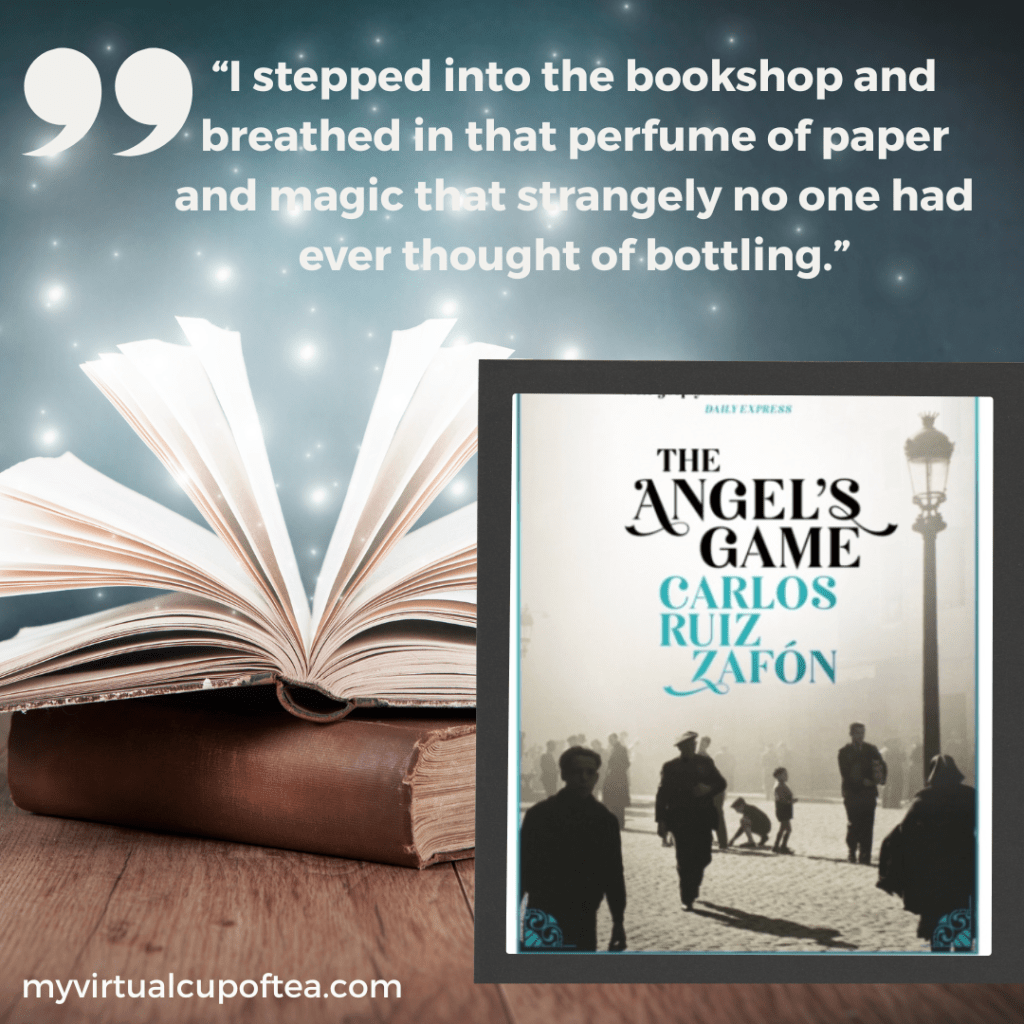
A quote that I like:
“I stepped into the bookshop and breathed in that perfume of paper and magic that strangely no one had ever thought of bottling.”
Themes That Linger Long After the Last Page
This is not a light, breezy read—and it’s not trying to be.
The Angel’s Game grapples with heavy, timeless themes:
- Faith and doubt
- Life, death, and legacy
- The seductive danger of absolute belief
- The idea that stories can save us… or ruin us
It’s philosophical without being pretentious and dark without being empty. The novel invites you to sit with discomfort and ambiguity rather than rushing toward clear answers.
Writing Style: Lyrical, Dark, and Intensely Atmospheric
Zafón’s prose is lush and poetic, but never wasted.
Every description feels intentional, every metaphor carefully chosen. His writing has a dreamlike quality—beautiful, eerie, and occasionally unsettling. This is a book to savour slowly, not rush through. It rewards readers who enjoy lingering over sentences and letting the atmosphere sink in.
If you love gothic fiction, literary mystery, or stories that feel almost like modern fairy tales for adults, this writing style will feel like home.
Is The Angel’s Game Right for You?
You’ll likely love this book if you enjoy:
- Gothic and atmospheric novels
- Dark literary fiction with philosophical depth
- Stories about writers, books, and obsession
- Ambiguous endings that invite interpretation
You may want to skip it if you prefer:
- Fast-paced, plot-driven thrillers
- Clear-cut answers and tidy resolutions
- Light or uplifting reads
The Angel’s Game is a book that demands patience and curiosity—but it gives back generously if you’re willing to lean into its shadows.
A Beautifully Dangerous Story
The Angel’s Game is haunting, intelligent, and unapologetically dark. It doesn’t aim to comfort the reader—it aims to challenge them. Carlos Ruiz Zafón reminds us that stories are powerful forces, capable of shaping lives, bending reality, and asking uncomfortable questions about who we are and what we’re willing to sacrifice to be remembered.
It’s a novel that stays with you—not because it explains everything, but because it refuses to.
And sometimes, those are the stories we remember the longest.
A Final Walk Through the Cemetery of Forgotten Books
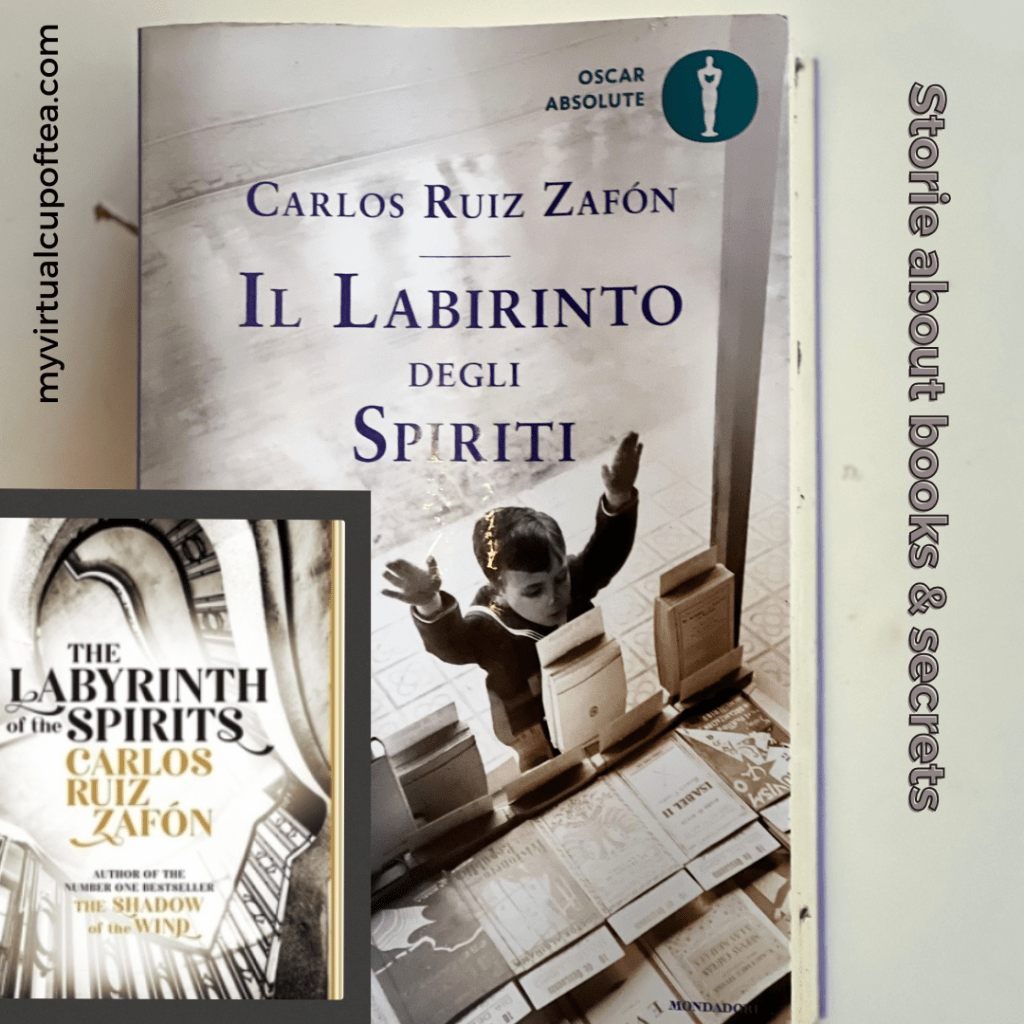
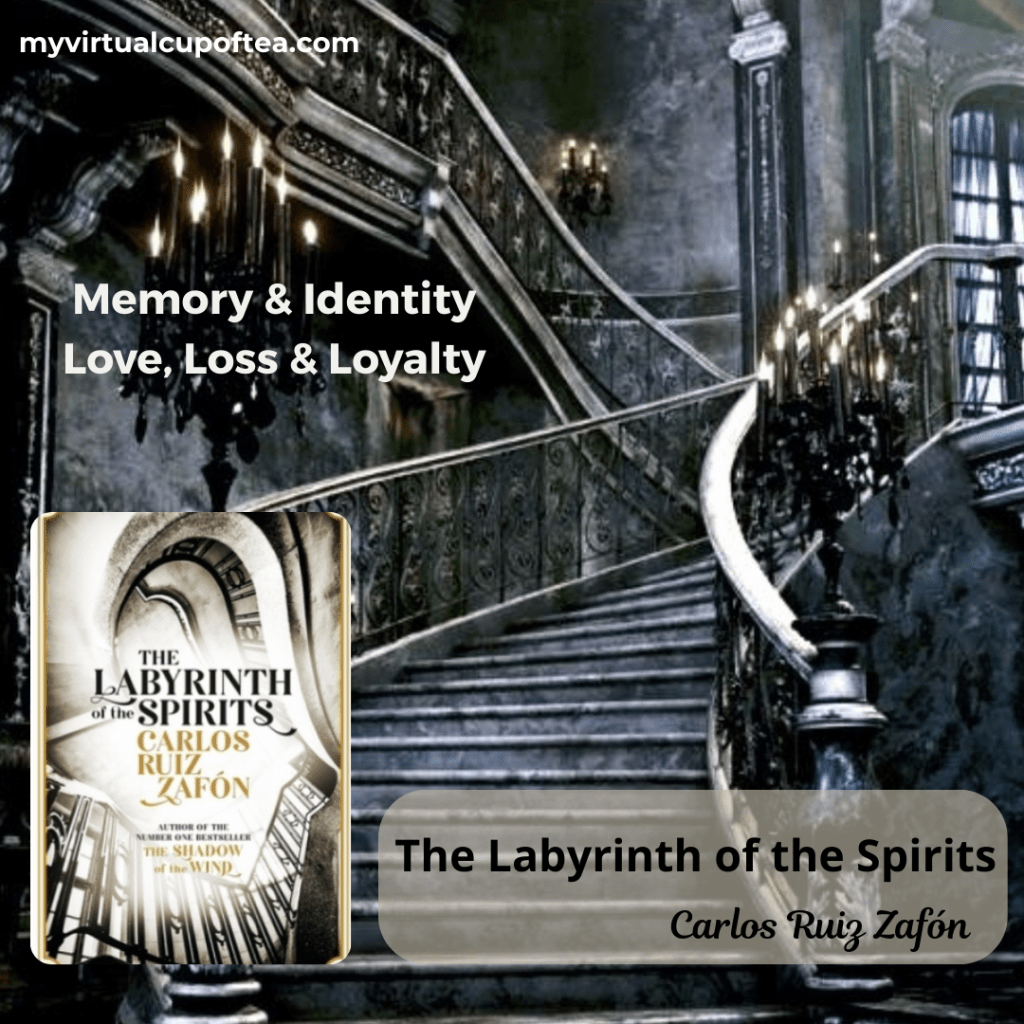
The Labyrinth of the Spirits
There are books you enjoy, books you admire, and then there are books that wrap themselves around your soul and refuse to let go. The Labyrinth of the Spirits is firmly in that last category.
As the fourth and final novel in Carlos Ruiz Zafón’s The Cemetery of Forgotten Books series, this book doesn’t just conclude a story—it deepens, enriches, and redefines everything that came before it. Even without spoilers, I can safely say this: Zafón doesn’t simply tie loose ends. He builds an intricate literary mosaic that rewards patient readers in the most satisfying way possible.
And yes, it’s hefty. But trust me—every page earns its place.

What This Book Is Really About (Without Spoilers)
Set in post-Civil War Spain, the story revolves around Alicia Gris, a detective with a troubled past and a keen sense of justice. Her enigmatic character perfectly fits the shadowy world of Zafón’s creation, where nothing is as it seems. As Alicia embarks on a mission to uncover the truth behind the disappearance of Spain’s Minister of Culture, she becomes entangled in a web of secrets that reaches back decades.
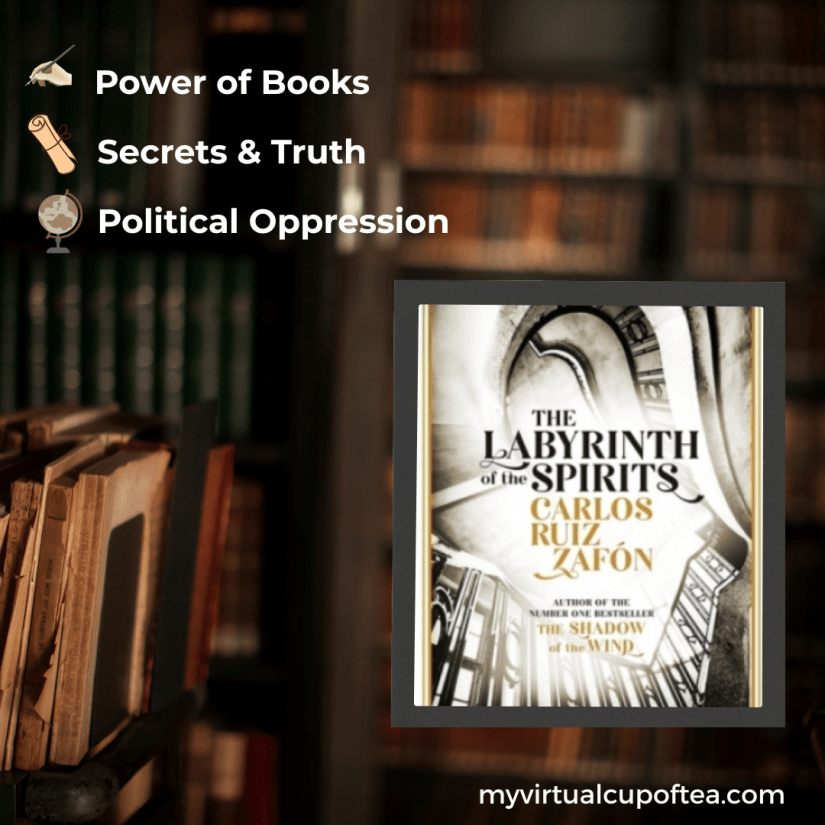
The Labyrinth of the Spirits is a literary mystery layered with political intrigue, historical trauma, and emotional depth. Set primarily in post–Civil War Barcelona, the novel explores:
- Secrets buried under authoritarian rule
- The power of books to preserve truth
- The long shadows cast by lies, guilt, and fear
- How the past relentlessly shapes the present
Zafón weaves these themes together through an investigation that slowly uncovers hidden connections spanning decades. The mystery unfolds deliberately, encouraging readers to pay attention, trust the process, and savour the journey.
This is not a book you rush through. It’s one you live inside for a while.
Barcelona: A Character in Its Own Right
If you’ve read any of the previous books in the series, you already know that Zafón’s Barcelona is not just a setting—it’s a breathing, brooding presence.
In The Labyrinth of the Spirits, the city feels darker, heavier, and more haunted than ever. Fog-filled streets, crumbling mansions, hidden corridors, and oppressive government buildings all contribute to an atmosphere that is equal parts gothic noir and historical drama.
Zafón’s descriptive writing is lush without being overwhelming. You don’t just see Barcelona—you feel it pressing in on the characters, shaping their choices and secrets.
Characters That Stay With You
One of Zafón’s greatest strengths is character work, his ability to bring his characters to life.
Readers will encounter:
- Complex investigators driven by both duty and personal demons, navigating the labyrinthine mysteries of the present
- Morally ambiguous figures who blur the line between hero and villain and bring in the narrative fresh layers of intrigue and complexity
- Familiar faces from earlier books, adding a sense of continuity and nostalgia for readers who have followed the series, but given new depth and perspective
What makes these characters so compelling is that no one is purely good or evil. Everyone is shaped by trauma, fear, love, and loss—making their decisions feel painfully human.
Even without revealing plot details, it’s safe to say that this book asks essential questions about truth, loyalty, and the cost of survival.
Writing Style: Rich, Intelligent, and Immersive
Zafón’s prose is elegant, atmospheric, and deeply intentional. He blends:
- Literary fiction
- Historical commentary
- Mystery and suspense
- Emotional introspection
The result is a novel that feels intellectually stimulating and emotionally resonant. There are moments of quiet beauty, sharp dialogue, dark humour, and heartbreaking reflection—all balanced with remarkable control.
Despite its length, the pacing remains steady. The story unfolds like a carefully constructed labyrinth (yes, the title is perfect), guiding you through twists and revelations without ever feeling tricked.
A quote that I like:
“The memories we bury under mountains of silence are the ones that never stop haunting us.“
Do You Need to Read the Other Books First?
Short answer: Yes—ideally.
While The Labyrinth of the Spirits can technically stand on its own, it is far more rewarding if you’ve read the earlier novels in the series:
- The Shadow of the Wind
- The Angel’s Game
- The Prisoner of Heaven
This final instalment builds upon characters, themes, and mysteries introduced earlier, and longtime readers will appreciate the emotional payoff and narrative depth that comes from that continuity.
A Worthy, Powerful Finale
The Labyrinth of the Spirits is not just a conclusion—it’s a celebration of storytelling itself. It honours the series’ central belief that books matter, that stories endure, and that truth—no matter how deeply buried—has a way of resurfacing.
This is a novel for readers who love:
- Thought-provoking literary fiction
- Slow-burn mysteries
- Historical depth
- Emotionally layered storytelling
If you’re willing to invest the time and attention it deserves, this book will reward you with an unforgettable reading experience. For those new to Zafón’s work, it is a compelling entry point into a world of literary wonders and mysteries waiting to be discovered.
And honestly? Saying goodbye to this world is bittersweet in the best possible way.

The City of Mist
Return to the mystical Barcelona library known as the Cemetery of Forgotten Books in a posthumous collection of stories, The City of Mist.

Stories in The City of Mist are imaginative and enchanting. They conjure up the mesmerising magic of their brilliant creator and invite us to dream along with him. The City of Mist offers you compelling characters, unique situations, and a gothic atmosphere reminiscent of our beloved Cemetery of Forgotten Books quartet.
Myvirtualcupoftea.com is a participant in the Amazon Services LLC Associates Program, an affiliate advertising program designed to provide a means for sites to earn advertising fees by advertising and linking to Amazon.com and affiliated sites. This post might also contain affiliate links to other sites. And if you purchase anything using these links, I earn a little commission with no extra costs for you. Thank you for supporting my blog!
 My Virtual Cup of Tea
3 thoughts on “Cemetery of Forgotten Books: Dark Stories, Dangerous Deals, and Barcelona’s Shadows”
Comments are closed.