


A Gentle, Soul-Soothing Practice for Stress, Anxiety & Emotional Clarity
**This post contains affiliate links, and if you purchase anything using these links, I will earn a small commission with no additional costs to you.
Emotional balance doesn’t have to be some faraway mountaintop moment reserved for monks and people with flawless morning routines. Sometimes it just looks like taking a breath. Stretching your spine. Unclenching your jaw. Showing up for yourself on the mat for ten minutes because life feels like… a lot.
Yoga gives your nervous system a soft landing place — a way to move the emotions stuck in your body, quiet the spiralling thoughts, and remind you that you’re allowed to feel grounded, peaceful, and even joyful.
Below, we’ll explore how yoga supports emotional well-being and guide you through a simple sequence designed to melt stress, reduce anxiety, and help you reconnect with your own centre.

Why Yoga Helps You Feel Emotionally Balanced
It Calms the Nervous System
Slow, mindful movement activates the parasympathetic nervous system — your body’s built-in “hey, you’re safe” signal. This lowers stress hormones and helps your mind settle. You build a deeper connection not only with your practice but also with yourself. It’s an invitation to live more consciously, breathe more deeply, and find stillness in a beautifully busy world.
It Moves Stagnant Emotions
Anxiety often lives in the chest. Grief in the throat. Stress in the shoulders. Yoga creates gentle movement that helps these emotions release rather than pile up. When you practice yoga, it extends beyond the mat — influencing how you treat others, handle challenges, and speak your truth.
It Creates Space in the Mind
Breathwork + movement = a natural mental declutter. You step off the mat feeling like someone opened a window in your brain. Understanding yoga philosophy doesn’t mean you have to live in a cave or meditate for hours. It’s about bringing awareness, kindness, and mindfulness into daily life.
It Reconnects You to Your Body
When emotions run high, we disconnect. Yoga brings you home — to your breath, your body, and your present moment. Yoga isn’t just about touching your toes — it’s about what happens when you rise back up. Asana practice teaches us patience, body awareness, and presence — lessons that ripple through our daily lives. Every pose is an opportunity to connect, breathe, and find steadiness amid chaos. Asana is simply a tool for preparing the body to sit in meditation for extended periods.
Emotional Balance Yoga Sequence
A grounding flow for stress, anxiety, and emotional clarity
This sequence is slow, gentle, and accessible. Think of it as a moving meditation — a chance to breathe a little deeper and feel a little lighter.

Sukhasana (Easy Seated Breath)
3 minutes
Sit comfortably. Hands on knees or heart. Cross-legged seated yoga posture that promotes relaxation, grounding, and improved posture.
Inhale slowly for 4… exhale for 6.
This longer exhale signals safety to the nervous system. A calming flow to soothe stress, anxiety & emotional overwhelm.
What it helps: Anxiety, racing thoughts, emotional overwhelm.


Balasana or Yoga Mudra (Child’s Pose)
1–2 minutes
Kneel on your mat, bring your big toes together, and let your knees drift apart. Fold forward, resting your forehead on the mat. Your arms extend forward, palms facing downward. To make Yoga Mudra, rest your arms comfortably alongside your body and relax them; your palms will be next to your feet, facing upwards.
Let the earth hold you — literally. Let your forehead rest heavily. Feel your shoulders melt toward the mat.
What it helps: Emotional release, tension in the shoulders, and mental fatigue.
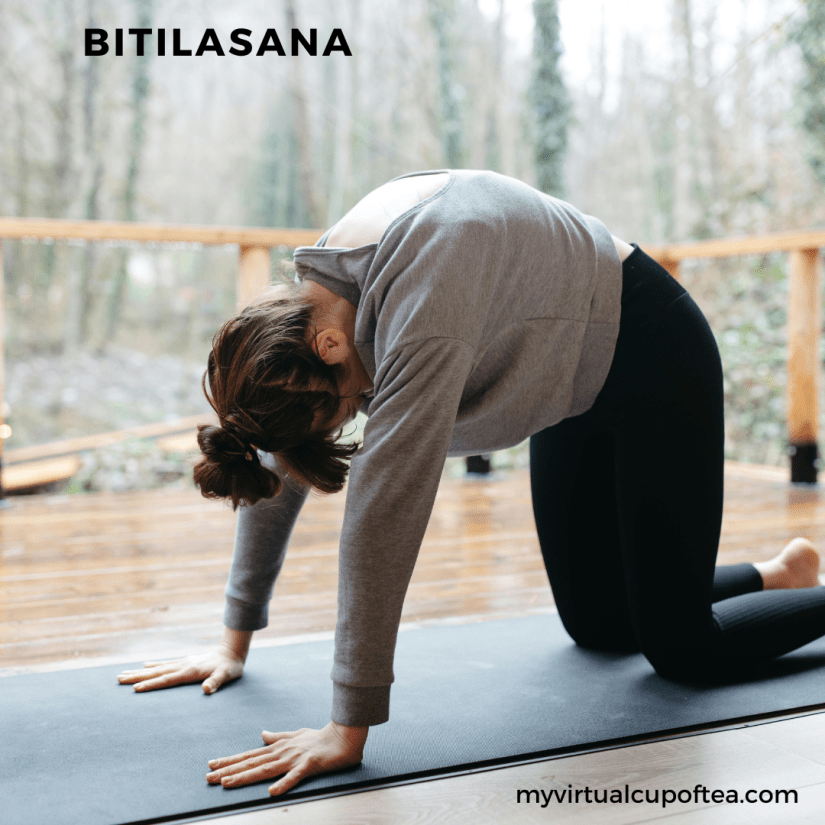
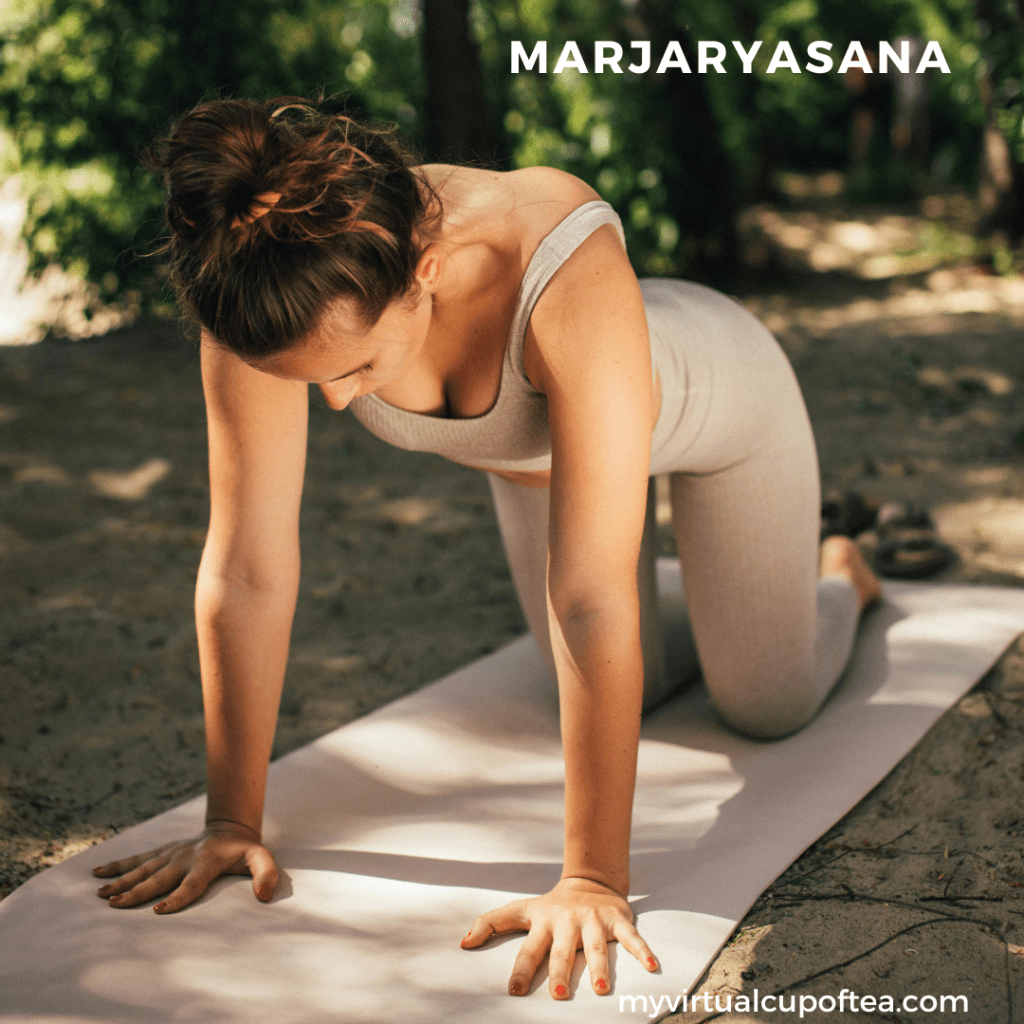
Marjaryasana/Bitilasana (Cat–Cow)
3 minute
Alternate arching and rounding the spine. Come to all fours. As you inhale, arch your back, lift your chest, and gaze slightly upward. This is Bitilasana. As you exhale, round your spine and tuck your chin to your chest, Marjaryasana.
Move with your breath, not your timer. Release tension stored in your back and chest.
What it helps: Stress stored in the back and emotional stagnation.


Uttanasana (Standing Forward Fold)
1 minute
Stand tall, then fold forward from your hips, bending forward toward your feet while exhaling. Keep your back flat and allow your upper body to hang loose, letting your head hang heavy.
Bend your knees, drop your head. Imagine worries draining into the floor.
What it helps: Nervous system reset, anxiety relief.

Anjaneyasana (Crescent Moon Pose)
1 minute each side
Anjaneyasana, or Crescent Moon Pose, is a kneeling yoga pose in which one leg is forward, the knee bent over the ankle, while the back leg is extended behind, the knee on the floor. Sink into a gentle lunge, then raise your arms.
Lift your chest gently. Create space for fresh energy and confidence.
What it helps: Emotional heaviness, chest tightness, and confidence boosting.

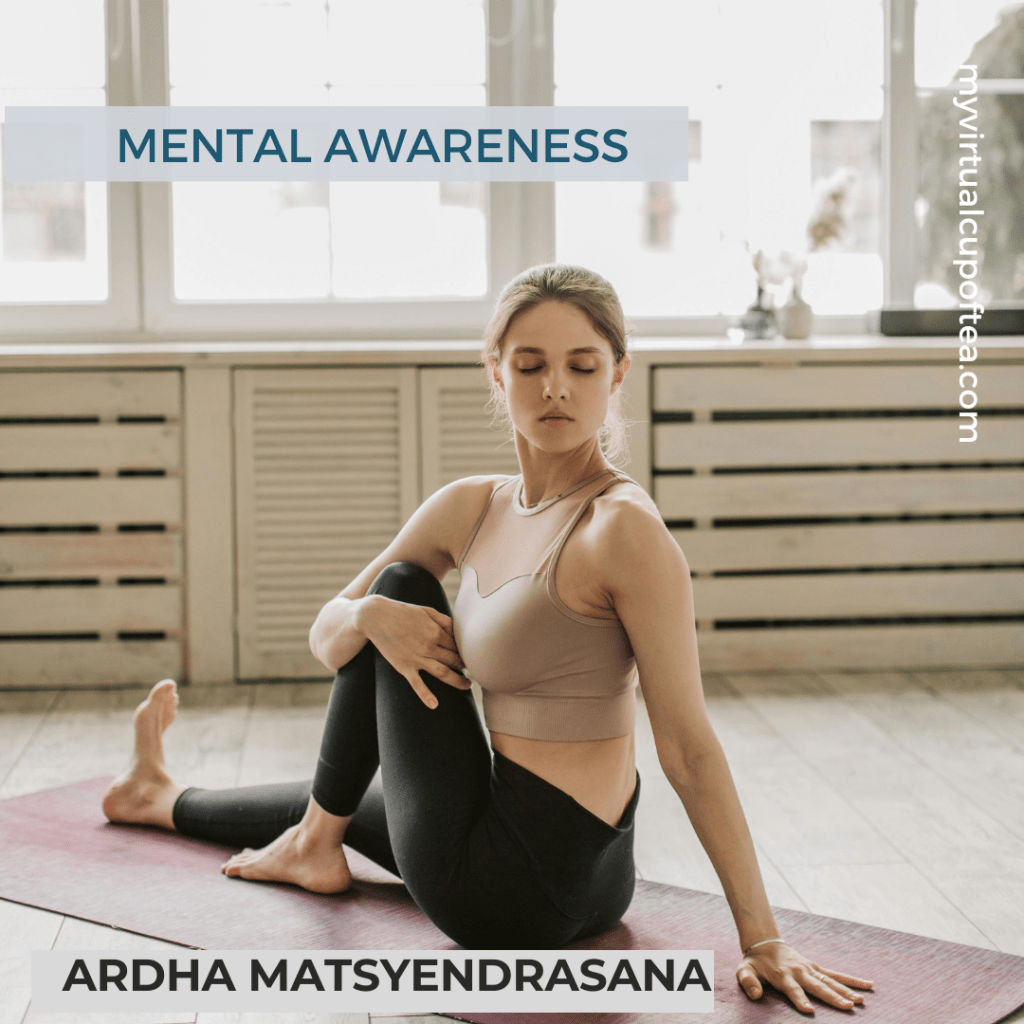
Ardha Matsyendrasana (Seated Twist)
1 minute each side
Sit with your legs extended, bend your right leg, and cross your right foot over your left leg. Then, twist your torso to the right by placing your left elbow on the outside of the right knee and your right hand on the floor behind you. Inhale to lengthen the spine, exhale to twist, and look over your right shoulder while keeping your spine straight. Repeat on the other side after releasing from the pose.
Twists help wring out emotional clutter (and physical tension).
What it helps: Mental clarity, mood balancing.

Viparita Karani Mudra (Legs Up the Wall)
3–5 minutes
Lie on your back, get comfortable, and relax your arms alongside your body. Breathe normally. Slowly lift your legs vertically until they form a 90 ° angle with the floor. Once your legs are raised, gently place your hands under your lower back, at the level of your waist.
Using your hands and elbows for support, lift your torso so that your body weight rests on your shoulders and your torso forms about a 45 ° angle with the floor.
This is the queen of calming poses. Let your entire body soften.
What it helps: Stress relief, anxiety, emotional grounding, improved sleep.
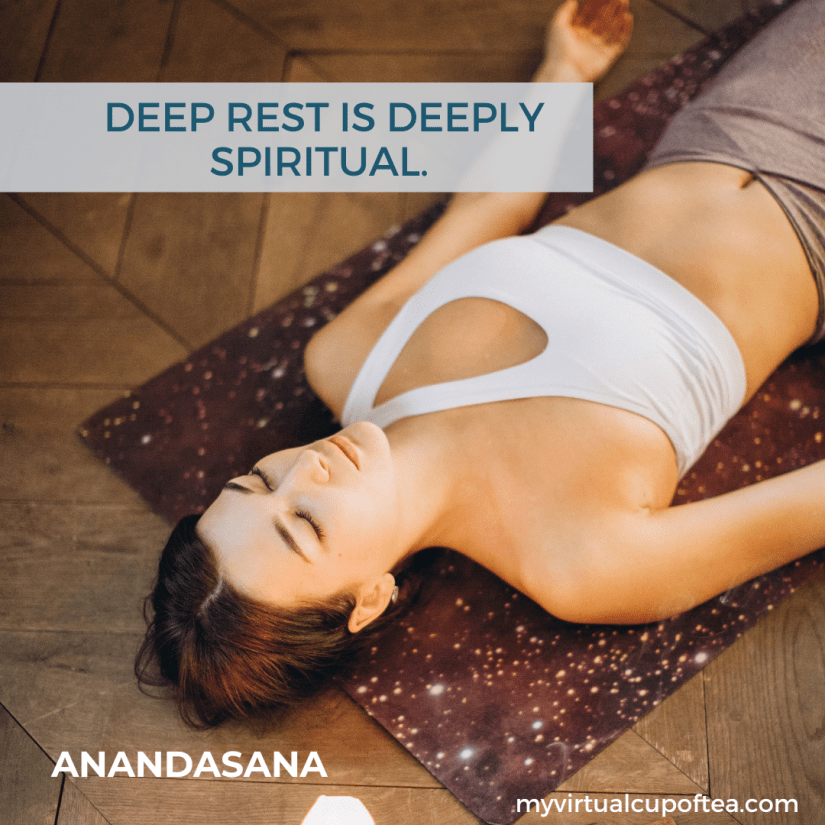
Anandasana (Blissful Pose)
3–5 minutes
Lie flat on your back, arms relaxed by your sides, palms facing up. Let your feet fall open naturally. Close your eyes and relax your eyelids.
Imagine your whole body softening, like warm wax.
What it helps: Emotional integration, deep relaxation, nervous system reset. Just being.
A Soft Reminder Before You Roll Up Your Mat
You don’t have to be flexible. You don’t have to “do it perfectly.” You don’t have to feel zen.
Yoga, in its truest form, goes far deeper than a sequence of asanas.
Emotional balance isn’t a destination — it’s a path.
And yoga, with all its quiet magic, is one of the most loving ways to begin.
Yoga is an ancient philosophy for living a more mindful, balanced, and purposeful life. At the centre of this philosophy lies Pranayama. “Prana” means life force, and “ayama” means control or expansion. By regulating your breath — through techniques like alternate nostril breathing or deep diaphragmatic breathing and channelling energy— you can calm the nervous system, sharpen focus, and restore balance. It’s the bridge between body and mind, reminding us that breath is our most accessible tool for returning to the present moment.
When concentration deepens, it becomes Dhyana, or meditation — a state of flow and awareness where thoughts fade and stillness expands. It’s not about emptying the mind, but about observing thoughts without attachment. Meditation is where self-awareness blossoms, helping us respond rather than react to life’s challenges.
Personal growth begins within us. You can’t control every external circumstance, but you can shape how you show up for yourself daily — with intention and grace.
Principles to keep in mind
- Keeping mind, body, and surroundings clear.
- Finding peace in the present moment.
- Building inner fire through consistent effort.
- Reflecting on patterns and growth.
- Trusting in something greater than yourself.
Myvirtualcupoftea.com is a participant in the Amazon Services LLC Associates Program, an affiliate advertising program designed to provide a means for sites to earn advertising fees by advertising and linking to Amazon.com and affiliated sites. Thank you for supporting my blog!
Read more Asana Prana Yama Mudra Bandha
 My Virtual Cup of Tea